Friday, February 25, 2022

High Court Justice Ajit Singh Bains

"God blesses those who hunger and thirst for justice, for they will be satisfied." Matthew 5:6


 A great judicial figure has died; having lived for more than a century. Ajit Singh Bains lived a full life serving the people. 

He served in the Army during the Second World War. The eldest son, Ajit Singh set high standards for his siblings especially in the areas of education. He completed his undergraduate studies at Jullundhur Khalsa College. He also taught there for a short time but was denied tenure because of his Communist sympathies. 

His father, Gurbakhsh Singh,(CPI) who had been tortured during years of imprisonment by the British as a political prisoner and was Sarpanch of Mahilpur, Punjab until his death. Ajit Singh was proud of his courageous father.

He decided to continue his education by attending Lucknow University to earn his law degree. As a lawyer Ajit Singh took up many controversial cases especially those concerning Human Rights. He became well known for his high principles and his refusal of any attempts to influence his judgements. 

In fact, when he made a decision against a case brought by Chief Minister Beant Singh, a man who was later found guilty of causing the death of 25,000 citizens, he was sentenced to Prison. Beant Singh was murdered by bombs carried by two men who were later declared National Martyrs. 

Throughout Ajit Singh's long and productive life of service to the Indian courts, he maintained close and affectionate family ties. 

 His unflagging emphasis on the importance of education is reflected in the distinguished careers of his younger siblings, especially his illustrious brothers: Yashdip Singh, Shakespearean scholar and  Hardial Singh, scientist and Communist leader.

 His sons and his grandchildren have continued with distinguished careers in the Law..

                May his people remember him. 
            HE HAS LEFT A PROUD LEGACY

Monday, January 10, 2022

The USE OF HUNGER STRIKES IN IRISH HISTORY

 Hunger Strikes and Self-Sacrifice

Hunger striking as means of obtaining social or economic redress or as a method of political confrontation has a plotted, yet discernible, history in Ireland. 


While the phenomenon is not peculiar to Irish politics, the country did witness one of the largest hunger strike protests of the 20th century. 


In October 1923, more than 8000 political prisoners, opposed to the 1921 Anglo-Irish Treaty, went on hunger strike. Two prisoners died before the protest was called to an end.

Although it can be demonstrated that the phenomenon of hunger striking is widely used as a means of political protest, particularly so with the last twenty-five years, it is equally valid to suggest that the hunger strike is an integral part of Irish history and mythology. 


Thus for the Irish, especially the northern Catholic republicans, the hunger strike, linked as it is to religio-political martyrdom and the pantheon of Irish heroes, is another means, possibly a weapon of last resort, of those nurturing a sense of oppression and frustrated in their attempts to resist.

There is a long history of hunger strikes in Ireland


In fact using hunger strikes as a method of protests in Ireland can be traced to the island's pre-Christian era when there was a strong tradition of oral legal codes. These codes were known as the Brehon laws (derived from the Gaelic brithem meaning' judge').

For the people of ancient Ireland, self-help was the only means to enforce a claim or right a wrong within the context of the Brehon laws. A frequent method of redress was for the aggrieved party to shame the  oppressor by literally starving slowly and publicly at his gate.

In more modern times the hunger strikes were directed against both the British government (1913-22) and the Irish Free State authorities (1923).


 Many of these hunger strikes were protests against prison conditions and the treatment of the prisoners. Other protests were more politically organized and centered on demands for political status or were means of dissent against perceived unjust imprisonment. In general the protests lasted for a few days but many, particularly the politically motivated, lasted for much longer. Some went on for seventy-six days, and while many prisoners negotiated settlements with the authorities or were unconditionally released, others, more determined, were forcibly fed. Seven prisoners died as a result of hunger strikes during this period.

Against the setting of the now immortal and near-mythical 1916 Rising,  the hunger strike became a weapon of extraordinary potency in Ireland. It was to become linked to militant republicanism along with Arthur Griffith's Sinn Fein party, a movement opposed to the use of physical force prior to 1916, which was deliberately and wrongfully blamed by the British for what was officially called 'the Sinn Fein rebellion.'

In May 1916, sixty-five Irishmen, including de Valera, who had been convicted as rebels, were imprisoned in Dartmoor. For disobeying prison rules the Irish Prisoners were given extra punishment. De Valera went on hunger strike against this punishment, ending it when the punishment was withdrawn.

Despite his participation in the hunger strike, de Valera was uncertain of its propaganda value against the on-going drama provided by the First World War. In a letter to fellow prisoners, de Valera, writing from his Dartmoor cell early in 1917, said:

You may be tempted to hunger strike. As a body do not attempt it whilst the war lasts unless you were assured from the outside that the death of two or three of you would help the cause. As soldiers I know you would not shrink from the sacrifice, but remember how precious a human life is.
Before the year was through, and after the release of Irish rebels from British jails, the propaganda value of death by hunger strike became very clear to the Republican movement. This means of protest and confrontation had proved to be an efficient political weapon. Irish deaths by hunger strike transfigured not only the perceived sacrificial victims but, in the eyes of many ordinary people, the cause for which they died.

LET US  REMEMBER HOW PRECIOUS A HUMAN LIFE IS.


Sunday, December 26, 2021

Writing Through to Write your Masterpiece


THE FIELD THEORY OF CREATIVITY


George Bernard Shaw talked about the “field theory” of creativity, borrowing a term from physics.

 Good ideas do not exist alone but in a larger field of imagination.

 As a young man Shaw wrote five novels. Can you name one? 

Shaw had to work through his novelist phase before he could arrive, in his late thirties, as a playwright.

 Shaw believed in productivity — just keep writing, was his advice to everyone. 

Norma Jenckes, a Shaw scholar at the University of Cincinnati, says Shaw’s attitude was that “you had to write yourself through all sorts of things, and then something might become your masterpiece.”

 Geniuses work hard. They’re prodigious. They can’t stop themselves from churning out work. 

Thomas Edison couldn’t stop inventing. Joyce Carol Oates can’t stop writing.

 Shaw published 55 plays. 

Milton Avery spewed paintings by the museum-load; when asked how he got inspiration, he said by going to the studio every day.

No piece of writing is wasted. Even if you don't like it when it's finished. At least you wrote it.  Now it is no longer clogging your brain. It is out there; it made room for the next idea to surface.
You have cleared the way to write something else

When I wrote my first play in the 1990s, I showed it to the great playwright, EDWARD ALBEE.
He was teaching in our department and we had become friends,
He read it and said, "Good  NOW WRITE TEN MORE." 

Then he added "But this will get you into YADDO and it did!


Thursday, December 23, 2021

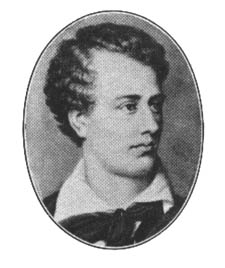
Byron's Ode to the Ocean


George Gordon Byron

George Gordon Byron


I fell in  love with Lord  Byron when i was only six years old.
I loved his address to the sea.  
In fact every year I recited it as I entered the ocean for the first time each summer. 

 I adored his good looks 
and I must admit that I took collections of his work from the  Pawtucket Public Library and cut the  image of him that was often the first page of the collection.

 I put those pictures on  my bedroom wall. 

He was to me the most handsome of men.  

Also I knew many of his shorter poems by heart. 
 I often chose  Byron as the poet to  read aloud and talk about in those weekly poetry sessions with my mother.
 I recited my favorite 
 the verse "They know not I knew thee,  who knew the too well.
Long , long will I rue thee too deeply to tell.
If I should meet you after long years,
 how would I greet thee? In silence and tears."

believe it or not 
seventy years after I first read those lines, on this night, I am writing them down from memory, I did not condescend to check their accuracy.

 You,dear reader, may have that pleasure.


HERE IS WHAT I CHANTED TO THE OCEAN--

"Roll on, Thou..."

(From “Childe Harold’s Pilgrimage”, Canto the Second, CLXXIX.)

Roll on, thou deep and dark blue Ocean – roll!
Ten thousand fleets sweep over thee in vain;
Man marks the earth with ruin – his control
Stops with the shore; -- upon the watery plain
The wrecks are all thy deed, not does remain
A shadow of man’s ravage, save his own,
When for a moment, like a drop of rain,
He sinks into thy depths with bubbling groan,
Without a grave, unknell’d, uncoffin’d, and unknown.

And I have loved thee, Ocean! and my joy

Of youthful sports was on thy breast to be

Borne like thy bubbles, onward: from a boy

I wantoned with thy breakers—they to me
Were a delight; and if the freshening sea
Made them a terror—’twas a pleasing fear,
For I was as it were a child of thee,
And trusted to thy billows far and near,
And laid my hand upon thy mane—as I do here


Wednesday, November 17, 2021

TO ACCEPT WHAT IS--THE TERRIBLE BEAUTY OF REALITY


The IDEA THAT YEATS WROTE ABOUT OF "A TERRIBLE BEAUTY 


Kaira Jewel Lingo, a former Buddhist nun in Thich Nhat Hanh’s Plum Village community in France, reflects on coming to terms with the unpredictable challenges of life:

In the Buddha’s most essential teaching of the Four Noble Truths, he shares his discovery that suffering is a part of life, and there is no escape from it. This is the first Noble Truth and acknowledging it can help us to suffer less. If we can accept where we are, and not judge the disruption in our life as wrong or bad, we can touch great freedom. This is because fighting what is doesn’t actually work. As the saying goes, “whatever we resist persists.”. . .

Thay [Thich Nhath Hanh] often said, “A true practitioner isn’t someone who doesn’t suffer, but someone who knows how to handle their suffering.” We could say that the measure of our accomplishment or success is not that our life has no ups and downs, but that we can surf the waves!

This attitude of acceptance is freeing when we apply it not only to our personal suffering but also to the suffering in the world. Once, as a young nun, when I was practicing a classic Plum Village guided meditation, I came to the final exercise, “Breathing in, I dwell in the present moment; breathing out, I know this is a wonderful moment.” Suddenly I found myself stuck when I did this practice, questioning how we could truly affirm it was “a wonderful moment” with all the violence, hatred, inequality, and preventable tragedies that are happening in the present moment all over the world. . . .

I sat in the question of it and began to see that along with all the suffering and pain, there are also many beings that are supporting others in the present moment. There are many hearts of compassion, opening to relieve suffering, to care for others, to teach, to show a different way. There are people who are courageous and standing up for what they believe is right, protecting our oceans, cleaning rivers and beaches, advocating for those who are oppressed. There are those in every corner of the planet who are quietly doing the things no one else wants to do: caring for the forgotten people, places, species, and doing what needs to be done.

When I focused on that other part of the larger picture, I was able to touch that, yes, this present moment is also a wonderful moment. I saw that suffering doesn’t have to disappear in order for beauty to be there. That life is about all of these things. . . . The reality is that there is great terror and pain, and there is great love and great wisdom. They’re all here, coexisting in this moment.


Here's  how Yeats  applied this idea to the Easter Rising of 1916

I write it out in verse –

MacDonagh and MacBride

And Connolly and Pearse

Now and in time to be,

Wherever green is worn,

Are changed, changed utterly:

A terrible beauty is born


Monday, November 8, 2021

Hunger Strike Memorial

 The Hunger Strikers' Memorial at Bobby Sands Circle.

Here is a picture of the only American  monument to  Hunger Strike Leader Bobby Sands. It is in a traffic circle in Hartford ,

It is a very solemn and dignified monument. It is the only one in this country.

The three words below the name and year of death  can be translated 'Our time will come,"

 Tiocfaidh Ár Lá (our time will come) This is a slogan of the Provisional IRA and it has become a kind of mantra since the Good Friday Agreement.  Over one hundred years have passed since the Partition of Ireland. When will Ireland the entire island be  a Nation Once again?

That is a question I ask myself every day. Why can't we have a monument like  this Hartford  one in Rhode Island?

Saturday, November 6, 2021

SLAVEHOLDER CHRISTIANITY IN AMERICA

 WE MUST SPEAK OF SYSTEMIC RACISM

Maybe because I have been working on writing  a series of three short plays about John Brown and his raid on Harper's Ferry and the aftermath of that raid, I have been reading more of the eloquent  speeches of Frederick Douglas. I have come to be amazed at the eloquence of a man who was a slave and never went to school. What a genius he was.  

That fact made me think and wonder  of how many extraordinary minds and souls were enslaved and never could fulfill the promise of the genius that God had placed in them.

What a tremendous loss and what a crime against the progress of the human race.

Recently in my daily readings of  Father Richard Rohr, I was surprised by this analysis of this saintly Franciscan priest,

Slaveholder Christianity


Fr. Richard offers a critique of how Christianity aligned with empire and colonialism manifested specifically in the United States:

The form of Christianity that has grown in the United States and spread throughout much of the world is what we have to fairly call “slaveholder Christianity.” The founders of our nation drew on a Christian tradition that had been aligned with empire for more than a millennium. It must be said that this form of Christianity is far, far removed from the Gospel and the example of Jesus as it has failed to respect the divine image in all beings. [1]

Culture, tradition, and power can keep us from recognizing the true message of the Gospel, which is why listening to other perspectives and voices is so necessary. Historian Jemar Tisby shares the writing of Olaudah Equiano (1745–1797), a formerly enslaved man, who published his autobiography in 1789:

By the time he wrote his autobiography, Equiano had converted to Christianity. As he reflected on his life, he viewed his experiences through the lens of his faith and commented on the hypocrisy of slave traders who claimed to be Christian. . . .

On the kidnapping of unsuspecting Africans and their separation from family, Equiano asked, “O, ye nominal Christians! might not an African ask you, learned you this from your God, who says unto you, Do unto all men as you would men should do unto you?” [2] 

Black people immediately detected the hypocrisy of American-style slavery. They knew the inconsistencies of the faith from the rank odors, the chains, the blood, and the misery that accompanied their life of bondage. Instead of abandoning Christianity, though, black people went directly to teachings of Jesus and challenged white people to demonstrate integrity. [3

ANSWERING THAT CHALLENGE

 SHOULD BE OUR NATIONAL

                     AGENDA.